Team
- Dan Orth, Scrum Master, Primary Sponsor Contact
- Stephanie Vore Apple, UX Designer, Visual Designer
- Tracy Flynn, Content Strategist, Presenter
Background
This was a sponsored school project for a UX project-management class at Bentley University. My team and I were tasked with helping the client–a software company that creates complex modeling applications for engineers–to improve communication with users when a design modification must sync throughout the project.
In addition to my work as individual contributor on this project, I assumed responsibility for drafting the client report–a 3500-word document required for the class–and delivering the final presentation to both the client and the class.
Process
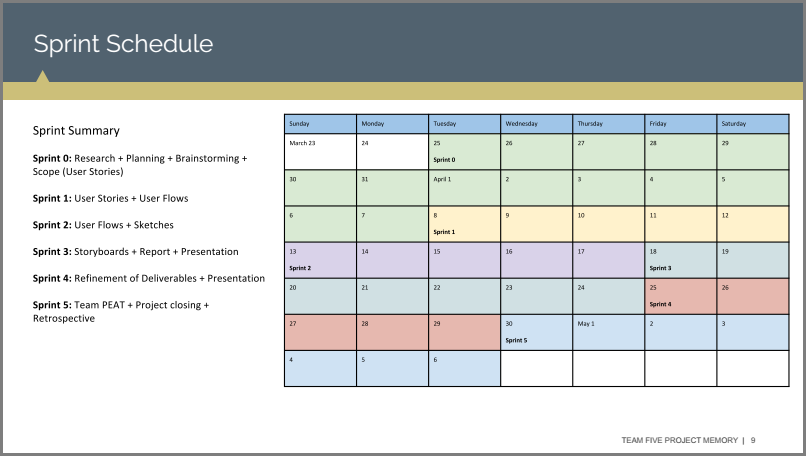
We adopted a modified Scrum process for this project and created a sprint calendar. Each week of the project, the team held two long-form meetings, two Scrums, and one client meeting.
Sprint 0: Project Planning
The longest sprint (nearly 2 weeks) was spent familiarizing ourselves with the problem, goals, and expected deliverables for the project. To that end, each team member created a list of preliminary user stories, and we compiled them for client review.

Sprint 1: User Stories + User Flows
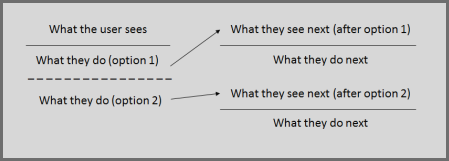
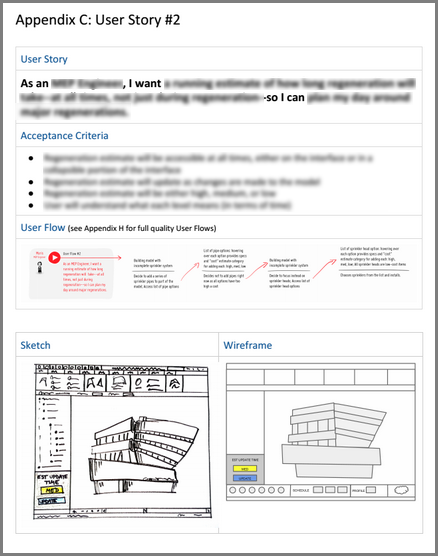
During Sprint 1, we used client feedback to finalize the user stories, then tied each user story to the software’s existing interface with user flows. Each user flow presented a proposed solution to the problems illustrated in the user stories.
Sprint 2: User Flows + Sketched Solutions
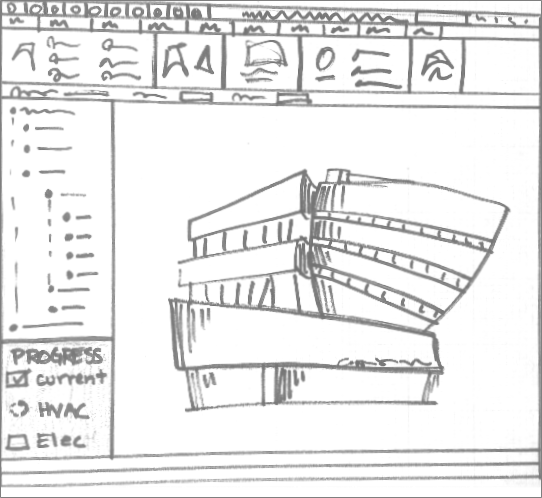
Next, we used the proposed solutions in the user flows to sketch out UI designs. The team met to discuss our individual sketches, and we chose best-in-class sketches to share with the client.
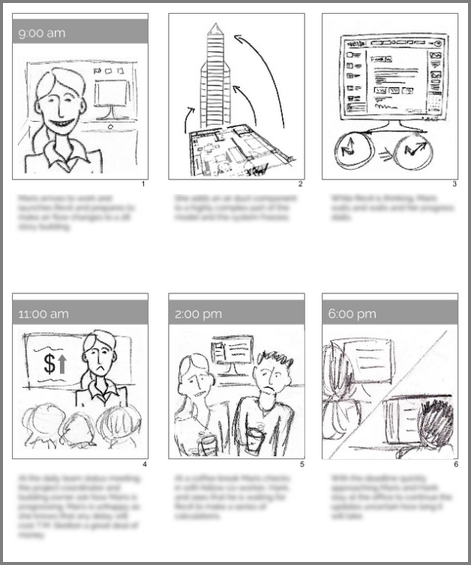
Up to this point, we had planned to create a clickable prototype as our final deliverable to the client, and as the owner of the client report, I was struggling to figure out what I would write. Fortunately, the client changed direction and preferred a fleshed-out user journey over a prototype for the final deliverable. This pivot made clear the way forward: we would build out a persona, create a journey map, and merge these items into a storyboard. The client report would provide detail and context to the project’s visual artifacts.
Sprint 3: Persona, Storyboard, Report Draft
Because we wanted our storyboard to communicate the effects of both the problem and the proposed solutions on users, I suggested that we create two day-in-the-life journeys for our persona: one while using the current interface, and another while using the improved interface we had proposed in our user flows and sketches. My teammates supported the idea, and we had a great time collaborating on the storyboards.
Sprint 4: Report and Presentation
Sprint four was dedicated to editing the client report and presentation. Stephanie created an appendix to the client report that combined all artifacts for each solution so the client could choose which solutions to present to their stakeholders. For the presentation, I rehearsed and re-rehearsed my delivery, taking audio recordings and reviewing them for glitches and awkward wording.
Sprint 5: Project Closing and Retrospective
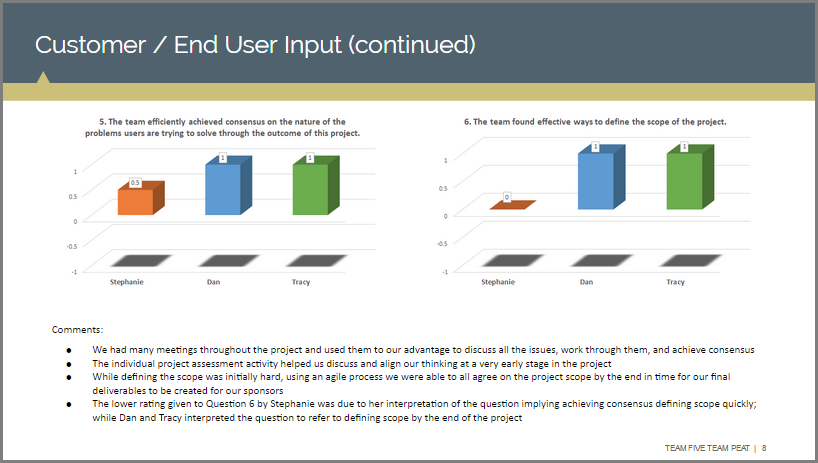
After delivering the final presentation, the team gathered for a retrospective meeting and celebration. We compiled individual PEAT ratings and discussed what worked well and what could have been improved. These lessons were handed in as part of the deliverables for the class.
Results
The client reported that they were very happy with the team’s work, and we earned a 4.0 on the class project.
The client report garnered the following feedback from the professor:
“A thorough definition of the problem. Excellent scope management. Clear summary of findings. User stories from Epic on down used effectively. Close connections made between user stories, personae and task flows. Well written. Sufficient documentation in Appendices in support of discussion…. This was a solid piece of work.”
 Tracy Flynn UX